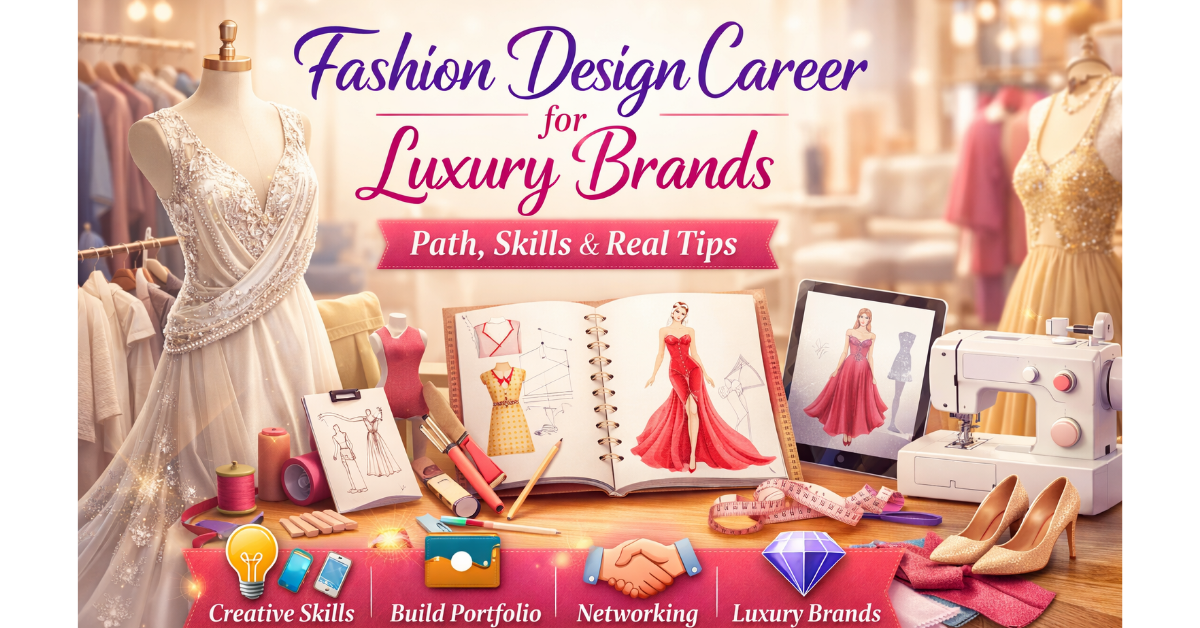
Building a Successful Fashion Design Career for Luxury Brands
Discover how to build a fashion design career for luxury brands with real tips, skills, examples, pros/cons, and insider pathways for beginners.
Starting a fashion design career for luxury brands is thrilling but can feel overwhelming. Many aspiring designers dream of working with names like Chanel or Gucci, yet they wonder where to begin. This guide shares practical steps, real tips, and personal-style advice to help you navigate your journey in the world of high-end fashion.
What is a Fashion Design Career for Luxury Brands?
A fashion design career for luxury brands means creating clothing, accessories, or collections for prestigious labels that prioritize quality, craftsmanship, and timeless style. These roles focus on combining creativity with brand heritage.
In this career, you may work on couture, ready-to-wear, or capsule collections. Unlike mass-market fashion, luxury brands expect precision, deep fabric knowledge, and unique creative vision. Exploring our Luxury Fashion Beginner’s Guide helps beginners understand these industry standards
How Do You Start a Fashion Design Career for Luxury Brands?
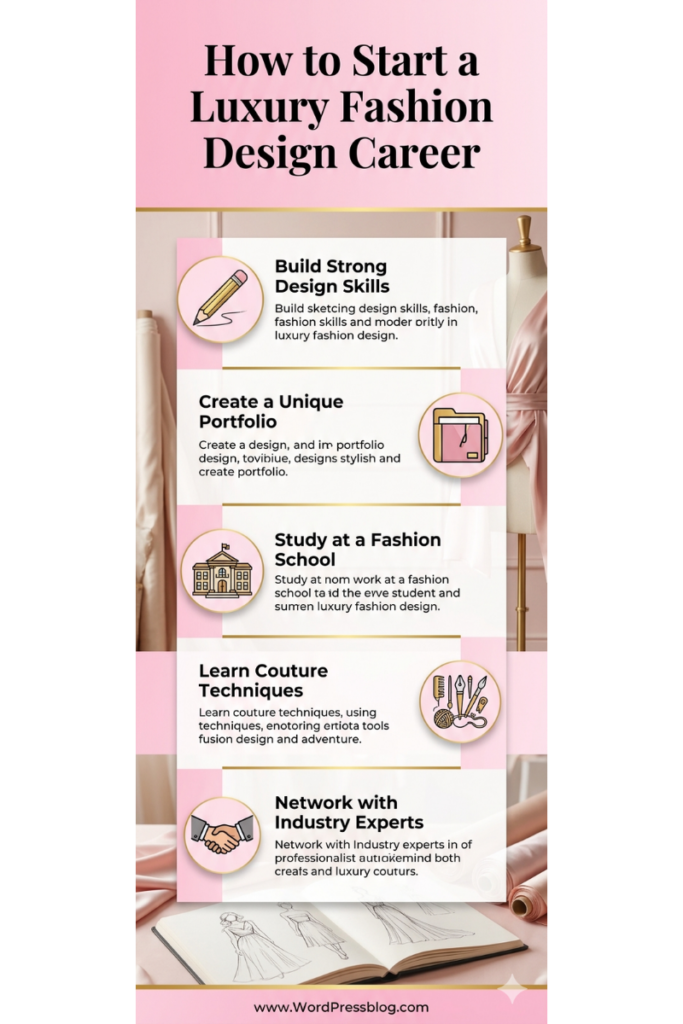
Start by building strong design skills, creating an original portfolio, studying at a reputable fashion school, and interning with established designers. Networking, understanding luxury consumers, and learning couture techniques are essential first steps.
What Skills Do You Need in a Fashion Design Career for Luxury Brands?
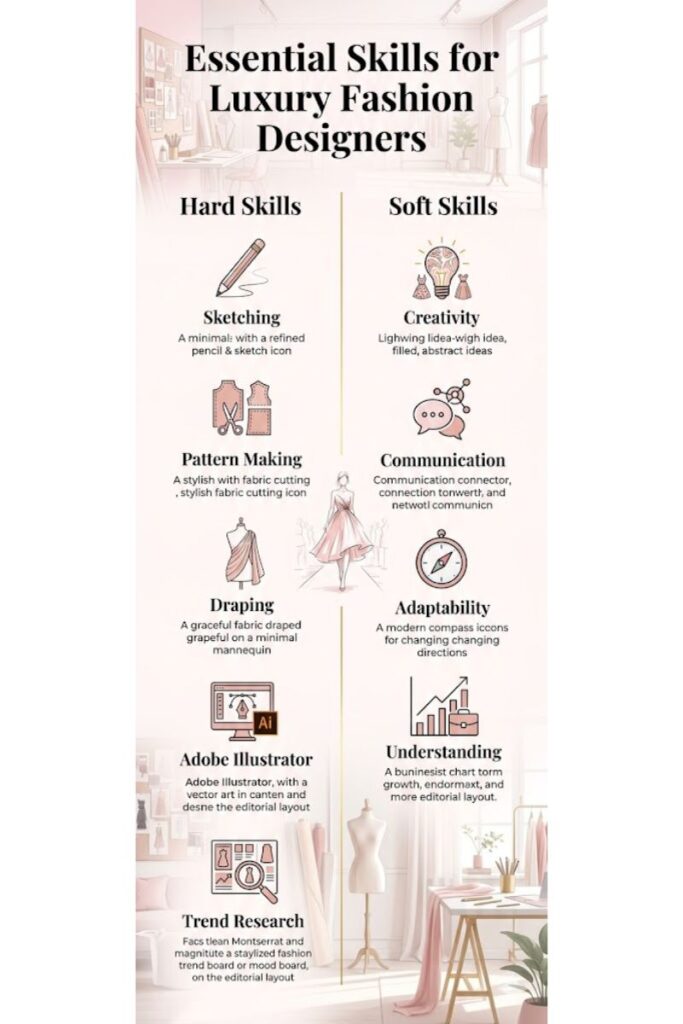
Essential skills include sketching, pattern making, draping, digital design tools like Adobe Illustrator, and trend research. Soft skills such as adaptability, communication, and understanding of the fashion business also help you thrive.
Why Is Portfolio Important in a Fashion Design Career for Luxury Brands?
Your portfolio shows your ability to turn ideas into wearable designs, highlighting originality, technical skill, and personal style. Recruiters at luxury brands review portfolios first before interviews.Include sketches, mood boards, fabric samples, photos of garments you’ve made, and digital designs. Studying successful examples from iconic houses like Dior or Hermès can inspire your work Vogue fashion careers and improve your presentation.
How Do Internships Help in a Fashion Design Career for Luxury Brands?
Internships give hands-on experience, mentorship, and connections that often lead to full-time roles. Luxury brands like Louis Vuitton and Prada offer programs where interns learn the design process and brand expectations.
Interns may assist with sample prep, fabric sourcing, or runway shows. This experience deepens understanding of luxury fashion operations. Many designers recommend starting with small brands to gain diverse skills before applying to top houses Business of Fashion guide
What Are Real Challenges in a Fashion Design Career for Luxury Brands?
Working in luxury fashion is competitive and fast-paced. Long hours to meet seasonal deadlines, precise couture standards, and balancing creativity with brand identity can be stressful.
Designers must align with a brand’s heritage while expressing originality. Understanding this balance often comes from experience, mentorship, and studying brand histories, which you can explore in luxury fashion designer profiles.
How Does Understanding Luxury Consumers Help in a Fashion Design Career for Luxury Brands?
Luxury consumers value quality, exclusivity, and meaning in every piece. Designers who study buyer behavior can create collections that resonate and sell.
For example, high-end buyers often prefer timeless elegance over fleeting trends. By understanding consumer preferences, you can design products that feel personal and valuable. Learning from luxury women’s clothing brands case studies can also provide insights into customer expectations.
What Are Pros and Cons of a Fashion Design Career for Luxury Brands?
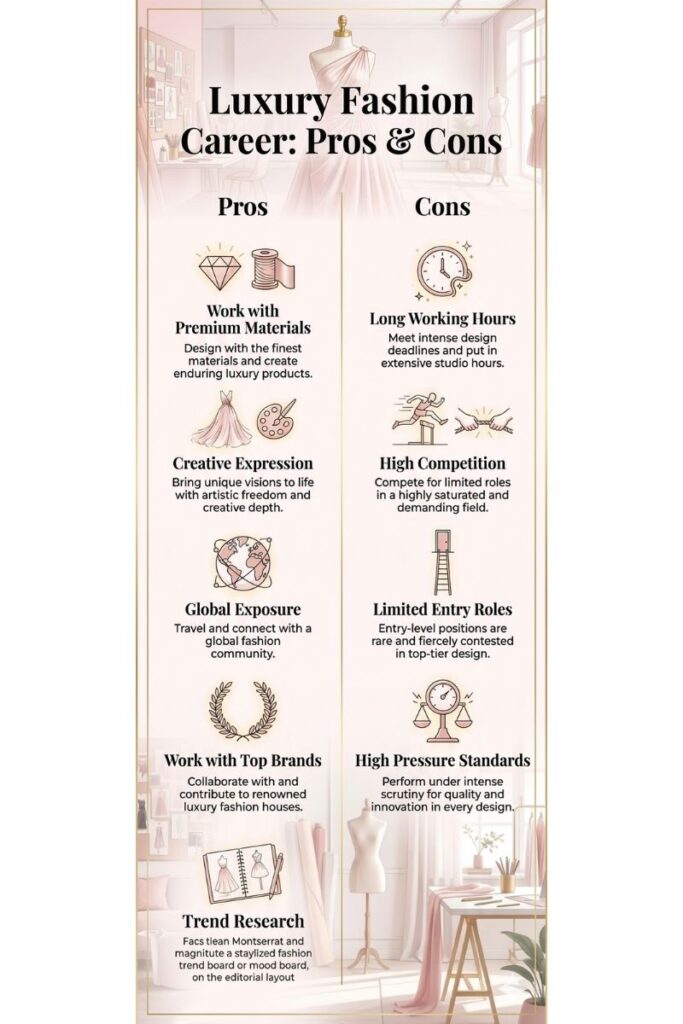
Work with premium materials, collaborate with artisans, and create pieces that may be worn by celebrities or tastemakers.
Cons: High competition, limited entry-level roles, long hours, and pressure to maintain brand standards, which may limit creative freedom.
Overall, many designers find the rewards outweigh the challenges, especially when contributing to iconic fashion houses.
Real Tips for Building a Successful Fashion Design Career for Luxury Brands:
Learn the Fundamentals: Study fashion illustration, pattern making, and textiles. Basics are essential for building advanced skills Luxury Fashion Beginner’s Guide.
Use Digital Tools: Master Adobe Illustrator and CLO 3D to showcase professional designs.
Attend Fashion Events: Network at trade fairs, exhibitions, and shows like Paris Fashion Week.
Find a Mentor: Mentorship can provide guidance on brand language, workflow, and portfolio improvement.
Study Brand Heritage: Learn why houses like Chanel and Dior succeeded Wikipedia luxury fashion.
Fashion Design Career for Luxury Brands vs. Fast Fashion: What’s the Difference?
Luxury fashion emphasizes quality, exclusivity, and artistry, spending weeks perfecting one garment. Fast fashion focuses on speed, volume, and affordability.
For example, a luxury dress may be hand-stitched, whereas a fast-fashion version is machine-made for mass production. Understanding these differences helps you choose a career aligned with your values and goals.
How to Get Hired by a Luxury Brand: Steps That Work
Build a portfolio tailored to luxury aesthetics.
Network at design events and forums.
Apply for internships or assistant designer positions.
Stay updated with trends, forecasts, and consumer behavior.
Persistence is key; many successful designers faced rejections before joining prestigious houses.
What Mistakes to Avoid in a Fashion Design Career for Luxury Brands
Relying only on academic projects without practical experience.
Ignoring fashion business knowledge.
Not updating skills with new design technologies.
Failing to research a luxury brand’s story before applying.
Continuous learning, adaptation, and curiosity are vital for long-term success.
FAQs
What degree do I need for a fashion design career for luxury brands?
A bachelor’s in fashion design helps, but strong portfolios and internships can also open doors.
Can I start without attending fashion school?
Yes. Self-taught skills, professional portfolios, and practical experience can substitute formal education.
Which brands are considered luxury fashion?
Chanel, Louis Vuitton, Dior, Hermès, and Gucci are widely recognized.
Is travel important in this career?
Yes. Fashion weeks, trade shows, and sourcing trips expand exposure and opportunities.
How long does it take to become a luxury fashion designer?
Typically 3–6 years of study and practical experience, though timelines vary.
Conclusion
A fashion design career for luxury brands blends art, craftsmanship, and heritage. While the path can be challenging, real experience, mentorship, and continuous learning can lead to a fulfilling career. Understanding brand stories, consumer behavior, and mastering design tools ensures you contribute meaningfully to the world of high-end fashion.